Most electrical panels in Northeast Florida homes were installed for a 1980s or 1990s lifestyle — central AC, a couple of TVs, and a standard range. Today’s homes in Orange Park, Ponte Vedra, and St. Augustine run heat pumps, induction cooktops, EV chargers, and pool pumps off the same aging box, often through summers that push humidity past 75% and accelerate corrosion inside the panel itself. The right question isn’t whether your panel will eventually need an upgrade — it’s whether the warning signs are already showing.
You should upgrade your electrical panel when it’s over 25–40 years old, when you’re adding a Level 2 EV charger or heat pump, when your home still has a fuse box or a Federal Pacific (FPE) or Zinsco panel, or when breakers trip frequently and lights dim under load. NEC 230.79(C) sets a 100-amp minimum for any single-family dwelling, and 200-amp service is now the new-construction standard.
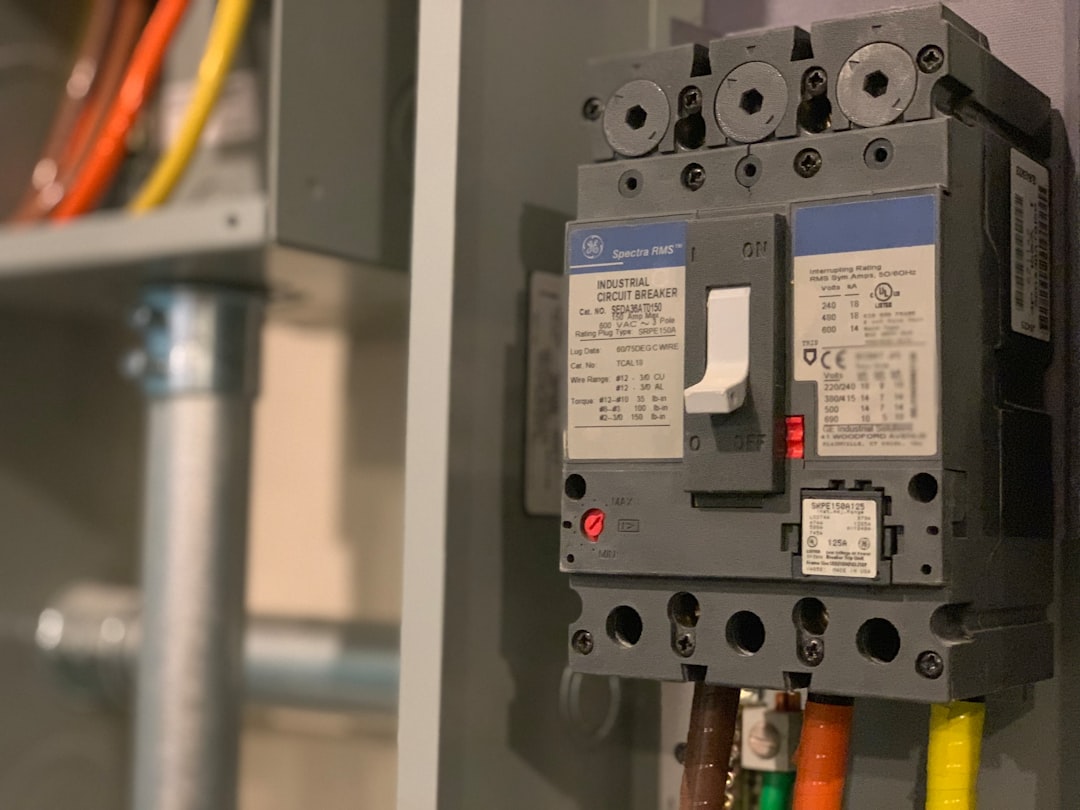
Most homeowners don’t think about the panel until something goes wrong. These eight signs catch problems before they become a fire-department call.
A breaker tripping once a year during a thunderstorm is normal. A breaker tripping every time you run the microwave and the toaster together means the circuit is overloaded — and an overloaded circuit running through a 30-year-old panel is how electrical fires start. ESFI tracks roughly 51,000 home electrical fires per year in the U.S., causing about 500 deaths and $1.3 billion in property damage.
Voltage sag under load is the panel telling you it can’t keep up. A modern 200-amp panel handles the inrush current of central AC compressors and electric dryers without a flicker. If you can see the difference, the panel — or the service feeding it — is undersized for the load.
A working panel runs at room temperature. Warmth in the cover means heat is being generated somewhere inside, usually at a loose connection, a corroded bus bar, or an undersized breaker. In humid NE Florida garages, that heat plus moisture accelerates the corrosion that caused it in the first place.
Burning plastic or that distinctive “hot insulation” smell near the panel is an emergency. Shut the main off if you can do it safely, leave the panel area, and call a licensed electrician immediately. Arcing faults alone start more than 28,000 home fires per year — and an arcing connection inside a panel is exactly that pattern.
Fuse boxes were standard in homes built before the early 1960s and don’t meet modern code. They lack the AFCI and GFCI protections that the 2023 NEC now requires across most of the dwelling, and replacing a blown fuse with the wrong amperage rating is one of the most common causes of overheating.
These two brands are documented hazards. The Consumer Product Safety Commission has flagged FPE Stab-Lok breakers with a failure rate widely cited at 25–40% — the breakers physically don’t trip during an overload, which is the one job they exist to do. Some insurance carriers won’t write or renew a homeowners policy on a home that still has one. If you have either, the panel should be replaced regardless of how it looks.
A panel should be silent and motionless. Audible buzzing usually means a breaker is failing internally. Visible scorching, rust on the bus bars, or moisture intrusion mean the panel has been compromised — common in NE Florida garages and utility closets that share an exterior wall.
Most residential panels last 25–40 years; some manufacturers and inspectors extend the range to 20–50 years depending on environment. ESFI specifically recommends a licensed electrical inspection on any home over 40 years old to confirm the system can still handle modern demand. In Jacksonville-area neighborhoods built in the 1970s and 1980s, that inspection often turns up a panel running well past its design life.
The lifespan numbers above are national averages. NE Florida homes — especially those within a few miles of the coast in Ponte Vedra, St. Augustine, and Nocatee — tend to land on the short end of that range.
The reason is simple chemistry. Florida coastal humidity often runs 70–80% or higher for months at a time. Salt aerosols from the Atlantic carry inland on prevailing winds. Inside an electrical panel, that combination forms green and white corrosion deposits on bus bars and breaker terminations. Corroded connections raise electrical resistance, resistance generates heat, and heat accelerates the next round of corrosion. A panel that would have lasted 35 years in central Georgia can fail at 20–25 years in a coastal Florida garage.
The Florida Building Code accounts for some of this. FBC 2023 Chapter 27 adopts NFPA 70 (the National Electrical Code) 2023 as Florida’s electrical standard, with amendments for high-velocity wind zones and coastal corrosion concerns. Panel-replacement permits issued in Duval, Clay, and St. Johns counties are inspected against that standard.
The biggest single driver of residential panel upgrades today isn’t age — it’s load. Three categories of equipment are putting demand on home electrical systems that wasn’t designed for in the 1980s and 1990s.
EV charging. A Level 2 EV charger requires a dedicated 240-volt circuit, typically 40 or 50 amps. Add that to a home already running a central AC, an electric range, an electric dryer, and a water heater off a 100-amp service, and you’ve exceeded what the panel can safely deliver. About 20% of homes need an electrical upgrade before installing an EV charger, according to Qmerit installation data. With battery-electric vehicles reaching roughly 7.5% of new U.S. vehicle sales by mid-2025 (S&P Global Mobility, October 2025), that pre-installation upgrade work is accelerating fast.
Heat pumps and electric heat. A residential heat pump typically draws 25–60 amps under normal operation. Auxiliary heat strips for cold-snap backup — the strips that kick in when the heat pump can’t keep up — add another 20–80 amps on top. On a 100-amp service, a heat pump plus the rest of the home’s load is often outside the panel’s safe capacity.
Induction ranges, hot tubs, ADUs. Each one adds a dedicated high-amp circuit. ENERGY STAR estimates that roughly 48 million U.S. single-family homes need additional electrical capacity to support modern energy-efficient appliances. Rewiring America’s 2024 analysis puts 50–60 million single-family homes under 200-amp service — the population that may need upgrades for full electrification.
A panel replacement is a permitted job in Florida. The code expectations have tightened with the 2023 NEC.
NEC 230.79(C) — Minimum Service Disconnecting Means Rating. A single-family dwelling must have a service disconnect rated at not less than 100 amperes. This is a hard floor regardless of calculated load. Many older NE Florida homes still run 60-amp services or split-bus 100-amp panels that no longer meet this standard.
NEC 210.8 — GFCI Protection (2023 expansion). The 2023 NEC expanded GFCI protection to all 125-250-volt receptacles in dwelling kitchens. When a panel is upgraded, the inspector checks whether new breakers must be GFCI-protected to current code.
NEC 210.12 — AFCI Protection (2023 expansion). The 2023 NEC added AFCI requirements for finished habitable basement spaces and brought 10-amp branch circuits into AFCI scope. Panel upgrades often surface AFCI-compliance work on existing circuits that homeowners didn’t expect.
Florida-specific. Electrical contractors in Florida must be licensed by the Department of Business and Professional Regulation (DBPR). Permits and final inspections are issued at the county level — Duval, Clay, St. Johns, and Putnam for ELR Electric’s service area. Inspectors verify panel labeling, breaker sizing, GFCI/AFCI compliance, service-entrance weatherproofing, and grounding/bonding.
The 2024 ACEEE national panel-capacity survey found that about 62% of U.S. single-family homes now have 200-amp service, and about 29.5% have panels rated at 100 amps or less. 200-amp service is the new-construction standard; anything under 200 amps is increasingly considered a constraint on what the home can support.
For a Jacksonville-area home, the right answer depends on what you run today and what you plan to add in the next decade. A 1,500-square-foot home with a gas range, gas dryer, and no plans for EVs or heat pumps can often stay on a healthy 100-amp panel. The same home with an electric dryer, induction range, a future Level 2 charger, and a heat pump conversion needs 200 amps.
A licensed electrician calculates the load using NEC Article 220 (general lighting, small appliance, laundry, fastened appliances, largest motor) and sizes the service accordingly. That load calculation, not a rule of thumb, is what determines whether 100, 150, or 200 amps is right.
A residential 100-amp to 200-amp panel upgrade in NE Florida typically runs $1,500–$4,000, depending on the condition of the service entrance, coordination with the utility, and local permit fees. Homes that need a new meter base, a new mast, or grounding-electrode work land at the higher end.
The process is straightforward when handled by a licensed contractor:
ELR Electric pulls the permit, coordinates the utility shutoff, performs the panel swap to NEC 2023 / FBC 2023 standards, and walks the inspection through with the county. The homeowner sees one company through the whole process.
ELR Electric serves homeowners across NE Florida — including Orange Park, Ponte Vedra, Middleburg, St. Augustine, Nocatee, Green Cove Springs, and the wider Jacksonville metro. We’re licensed by the Florida DBPR, we pull the county permit, and we coordinate every step of the panel upgrade process — from load calculation to utility reconnect. If your panel is showing any of the eight warning signs above, or if you’re planning an EV charger, heat pump, or major remodel, schedule a panel evaluation and we’ll tell you what the load actually calls for.