The electrical panel is the heart of your home’s electrical system. Every circuit, every outlet, every fixture, and every appliance traces back to the panel. When the panel is healthy, the system is healthy. When the panel has problems — failed breakers, corroded buses, missing grounding, overloaded service, or one of the documented unsafe panel brands — those problems affect every circuit in the home. A real panel inspection by a licensed electrician is the diagnostic that tells you whether your system is safe, code-compliant, and able to handle the loads you actually run. This guide walks NE Florida homeowners through what a panel inspection actually covers.
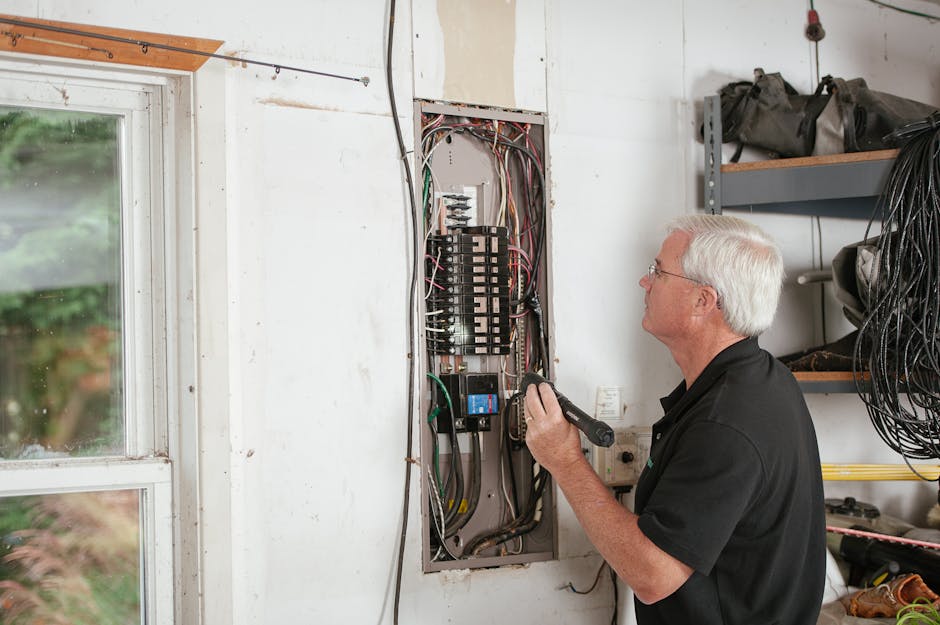
An electrical panel inspection is a detailed evaluation of a home’s main electrical panel, service entrance, grounding system, and connected branch circuits, performed by a licensed electrical contractor. It identifies the panel manufacturer and model, evaluates the condition of the panel and its components, verifies code compliance, assesses capacity against current household loads, and produces a written report with photo documentation and prioritized remediation recommendations.
A few specific situations call for a panel inspection.
Before buying a home. General home inspectors look at the panel briefly. A dedicated electrical inspection by a licensed contractor catches the panel-level problems — Federal Pacific Electric (FPE) Stab-Lok and Zinsco panels, undersized service, grounding deficiencies, missing GFCI/AFCI protection — that affect both safety and resale.
Before a renovation or addition. Any project that adds significant electrical load (kitchen remodel, addition, hot tub, pool, EV charger) needs to start with a panel evaluation to determine whether the existing panel can support the new work or whether an upgrade comes first.
Before insurance changes. Florida insurers increasingly scrutinize older panels, and FPE or Zinsco panels are increasingly cited in non-renewal or rate-increase decisions. A panel inspection gives you the documentation you need to support an insurance application or to plan the upgrade that keeps you insurable.
After storm or surge damage. A documented panel inspection after a lightning event, hurricane, or other electrical incident creates the record an insurance claim needs and identifies any damage that has not yet manifested as a circuit problem.
Routine intervals on older systems. Homes with original electrical from the 1970s or earlier benefit from a panel inspection every five to ten years. Connections loosen with thermal cycling, components age, and capacity needs grow.
Older Jacksonville-area construction adds its own layer to this kind of project. Homes built in the 1970s and 1980s in neighborhoods like Mandarin, Arlington, Sandalwood, Lakeshore, and parts of Orange Park were wired to the standards of their era, which means fewer circuits, fewer outlets per room, and electrical layouts that assumed one television, one window air conditioner, and no home office. A modern household runs more devices on the same wiring, and the cumulative load shows up as warm outlets, dimming lights when the AC starts, and breakers that trip more often than they used to.
The conductors running from the utility service drop or lateral to your meter base, and from the meter base to the panel, are the service entrance. The inspection looks for damaged insulation, undersized conductors for the panel rating, proper weatherheads, corroded meter cans, and code-compliant clearances. In NE Florida, salt-air corrosion at meter cans is the most common service-entrance issue, especially for homes near the coast.
The meter base is utility-owned but homeowner-responsibility for the enclosure. Inspections check the meter base condition, the integrity of the lugs and bus, and the main disconnect’s accessibility and rating. Older homes sometimes have the main disconnect inside the home (a fused disconnect or fused main breaker in the panel itself); newer code requires an exterior main disconnect for first-responder access.
This is where the most consequential finding usually comes from. The inspector identifies the panel brand. Two brands deserve special attention.
Federal Pacific Electric (FPE) Stab-Lok panels are documented as having breakers that fail to trip during overloads — a known fire hazard. FPE panels were widely installed in homes built from the 1950s through the early 1980s. Identification: the FPE logo, the “Stab-Lok” branding on breakers, the specific breaker mounting pattern. Recommendation: full panel replacement.
Zinsco panels are also documented as having breakers and bus connections that fail to trip and that overheat at lug connections. Zinsco panels were installed in homes from the 1970s through the early 1980s. Identification: the Zinsco branding, the distinctive multi-colored breakers, the specific bus design. Recommendation: full panel replacement.
If the panel is one of these brands, the rest of the inspection still happens, but the headline recommendation is panel replacement regardless of how the other components look.
The bus bars inside the panel are the conductors that distribute power to each breaker. The inspection checks for visible damage, melt marks, corrosion, scorching, and signs of arcing. Bus damage is usually a sign of a past overload or short circuit that the breaker did not catch fast enough, and indicates the panel needs replacement.
Every breaker in the panel gets evaluated. Double-tapped breakers (two conductors landed on a single breaker terminal not designed for two) are common code violations that need correction. Mismatched breaker brands in panels not listed for the substitute breakers are a code violation. Visibly damaged, scorched, or warm breakers need replacement. AFCI and GFCI breakers are noted, including which circuits do and do not have current code-required protection.
NEC Article 250 requires a complete grounding electrode system — typically two ground rods spaced at least six feet apart, plus a grounding electrode conductor properly sized for the service. Metal water service piping must be bonded to the grounding system, and metal gas piping must be bonded where the gas service enters the home. The inspection verifies that all of this is present and correct. Missing or improper grounding is a serious safety issue that almost never appears in a general home inspection report.
NEC Article 210.8 requires GFCI protection in kitchens, bathrooms, garages, basements, laundry areas, outdoors, and within six feet of any sink. NEC Article 210.12 requires AFCI protection on most residential branch circuits. The inspection identifies where required protection is missing and what bringing the home up to code would involve.
NEC Article 408.3 requires accurate circuit directory labeling. Many panels have outdated, missing, or wrong labels. The inspection notes the labeling condition and includes a corrected directory as part of the work.
The inspector evaluates whether the current service size matches the current load and whether headroom exists for future additions. A 100-amp service in a home that has long since added central A/C, EV charging plans, hot tubs, and modern appliances is undersized for the loads, and the inspection report addresses what upgrade scope would be needed.
NEC Article 230 governs the service conductors and the equipment that delivers utility power to the panel, and NEC Article 250 governs the grounding and bonding system that ties everything to earth. In plain language, Article 230 dictates how the wires from the meter reach the main breaker and how that main disconnect has to function; Article 250 dictates that the entire electrical system has a low-resistance path to ground so a fault current trips a breaker instead of finding another way out. An upgrade that touches the service or panel always includes verifying both, because a panel that looks fine but is bonded incorrectly is still a shock and fire risk.
A few inspection findings show up more often in NE Florida.
Salt-air corrosion at meter cans, outdoor disconnects, and outdoor lighting circuit boxes — most common in Ponte Vedra, St. Augustine, Vilano Beach, and coastal Jacksonville neighborhoods.
Lightning damage showing as scorched bus, damaged breakers, or fried surge protectors — common across all of NE Florida after active summer storm seasons.
Older panel brands — FPE and Zinsco panels are still in many Jacksonville-area homes built from the 1960s through the 1980s.
Undersized service for modern loads — common in homes built before about 1985 that have not had a service upgrade since.
Florida homeowner insurance carriers have grown stricter about Federal Pacific Stab-Lok and Zinsco panels in recent years. Several carriers will not write a new policy on a home with these panels, and a few will not renew an existing policy without proof of replacement. The safety case for replacing them does not soften with time — both brands have documented histories of breakers that fail to trip during overloads, which is exactly the failure mode that starts panel fires. Even where coverage is available, premiums and deductibles often reflect the added risk. Replacement is the only fix; AFCI or GFCI retrofits do not address the underlying breaker failure.
The inspection should be performed by a licensed electrical contractor registered with the DBPR ECLB. The deliverable should be a written report with photos, an identified-issues list categorized by severity, and quoted remediation costs. Verbal reports without documentation are not adequate for insurance, real estate, or planning purposes.
A complete inspection on a typical single-family home takes one to two hours. The findings drive the next steps — whether to schedule remediation, to plan a panel upgrade, or to renegotiate a real estate transaction based on the report.
ELR Electric is a licensed Florida electrical contractor serving Jacksonville, Orange Park, Ponte Vedra, St. Augustine, Middleburg, and the surrounding NE Florida communities. We provide thorough electrical panel inspections with photo-documented written reports, identify code and safety issues honestly, and quote remediation transparently. Call us to schedule.
Learn more about our work in your area on our Jacksonville electrician page and our Orange Park electrician page.