NE Florida has a lot of housing stock that predates modern electrical standards. Older Jacksonville neighborhoods like Riverside, Avondale, Springfield, and Murray Hill; older sections of Orange Park, Middleburg, and Fleming Island; mid-century homes in St. Augustine and the older parts of Ponte Vedra — all have homes with original electrical systems that have been patched, extended, and worked around for decades. At some point the patches stop being economical, and a real rewire becomes the right answer. The trick is recognizing the signs before something goes badly wrong.
A home needs rewiring when the existing branch wiring is unsafe, non-compliant with current code in ways that cannot be remediated incrementally, or unable to support modern loads. Common rewire triggers include knob-and-tube wiring still in service, aluminum branch wiring causing connection failures, two-wire ungrounded systems, fabric- or cloth-insulated conductors with brittle insulation, and damage from past fires, water intrusion, or rodent activity.
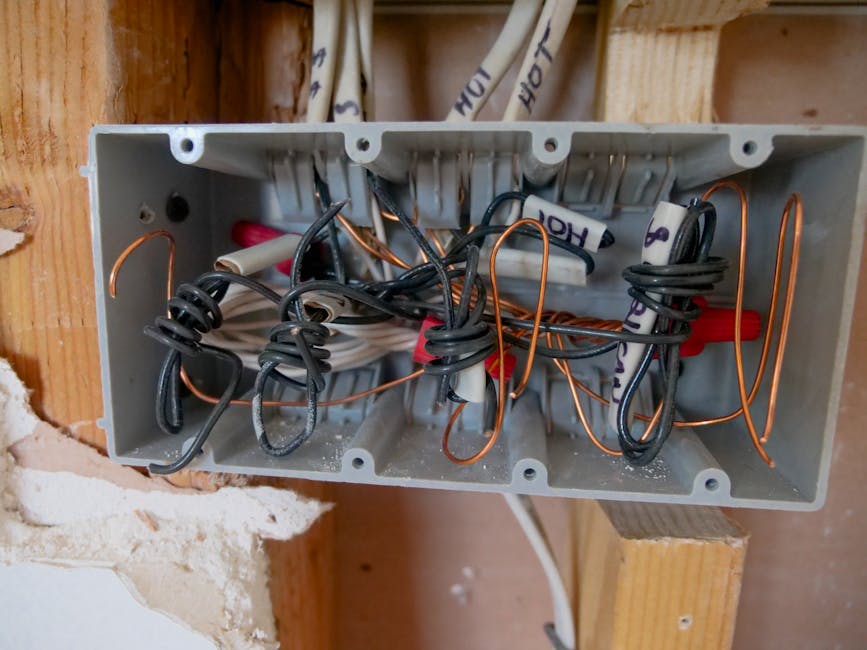
If your home was built before about 1950 and has not been rewired, some original knob-and-tube wiring is likely still in service. Visible signs include exposed ceramic knobs in attics or basements with single conductors strung between them, and outlets with only two slots and no third grounding hole. Knob-and-tube is brittle, ungrounded, increasingly uninsurable in Florida, and is one of the strongest indicators that a rewire is appropriate.
Aluminum branch wiring was used widely from about 1965 through the mid-1970s. Conductor markings on visible cable jackets that say “AL” or “ALUMINUM” indicate aluminum branch wiring. Symptoms include warm or discolored outlets and switches, flickering lights, the smell of overheating plastic, and occasional fires at receptacle locations.
Aluminum branch wiring has two acceptable remediations — full replacement with copper, or listed connectors (COPALUM or AlumiConn) at every device. For homes that need other electrical work anyway, a full rewire is often the cleaner answer.
Outlets with only two slots (hot and neutral, no separate grounding hole) indicate an ungrounded branch wiring system. Modern appliances and electronics expect grounded circuits. Lack of grounding is also a real shock hazard for certain failure modes. Replacing two-prong outlets with three-prong outlets without rewiring is a code violation; the only legitimate fixes are GFCI replacement of selected outlets or a full rewire.
Repeated breaker trips, especially when nothing obvious is loading the circuit, indicate either an overloaded circuit (the wiring is sized too small for the loads it serves), a damaged wire run inside the wall, or aging insulation that has reached the failure point. Diagnosis often finds problems consistent with aged or damaged wiring. If the panel is also old, the combination strongly suggests rewire.
Lights that briefly dim when the refrigerator or A/C kicks on are usually normal voltage drop on a healthy system. Lights that flicker constantly, dim consistently across multiple rooms, or that fluctuate visibly when small appliances are used indicate loose connections, undersized wiring, or a service-level problem. A full diagnostic identifies whether the problem is at the panel, in the service entrance, or in the branch wiring — and rewire is the answer when the issue is distributed across the branch wiring.
A wall plate or device that feels warm to the touch is detecting a problem inside the wall. Loose connections, undersized conductors, or failing aluminum joints all produce heat at the device. Discoloration on plates or in the surrounding wall is past heat damage. Either condition is a serious warning sign that should not be ignored, and is often part of the pattern that drives a rewire decision.
The smell of overheating plastic — a fishy or burning-plastic odor — indicates insulation degrading from heat somewhere inside the wall. This is an emergency-grade warning sign that often appears just before a fire. Cut power at the main breaker, leave it off, and call an emergency electrician. If the diagnostic finds widespread damage or aging wiring, the recommendation may be to rewire rather than spot-repair.
Receiving a shock when plugging or unplugging a device, or seeing sparks beyond the small normal arc, indicates a serious wiring problem. Causes include ungrounded systems, ground faults, damaged neutrals, or moisture in junction boxes. Spot repair sometimes fixes specific cases; widespread problems suggest a rewire.
The National Electrical Code drives most of the safety requirements that apply to this work. NEC Article 210.8 mandates GFCI protection in kitchens, baths, garages, laundries, outdoor receptacles, and anywhere within six feet of a sink — the goal is to shut the circuit off in milliseconds when current finds a path through a person instead of through the intended wires. NEC Article 210.12 mandates arc-fault protection on most residential branch circuits, which catches the kind of low-energy arcing inside damaged insulation that starts hidden wall fires. Bringing a home into compliance with these articles is one of the most direct safety improvements an upgrade delivers.
A few other signs accompany the major signals.
Panel is FPE Stab-Lok or Zinsco. Panel replacement is mandatory regardless of branch wiring condition, but a home with one of these panels is often also a candidate for rewire — they tend to coexist with original aluminum or undersized wiring.
Service is 60-amp or 100-amp in a home that has long since added central A/C, modern appliances, and electronics. Service upgrade is the start; depending on branch wiring condition, a rewire often follows.
No GFCI or AFCI protection anywhere in the home. Spot installation of GFCIs is possible; full AFCI compliance requires breaker-level installation. A home that needs both is often a home with branch wiring that should be evaluated for rewire.
Insurance non-renewal or rate increase tied to electrical findings. Florida insurers are increasingly scrutinizing older electrical systems. Documentation showing recent rewiring restores insurability.
Older Jacksonville-area construction adds its own layer to this kind of project. Homes built in the 1970s and 1980s in neighborhoods like Mandarin, Arlington, Sandalwood, Lakeshore, and parts of Orange Park were wired to the standards of their era, which means fewer circuits, fewer outlets per room, and electrical layouts that assumed one television, one window air conditioner, and no home office. A modern household runs more devices on the same wiring, and the cumulative load shows up as warm outlets, dimming lights when the AC starts, and breakers that trip more often than they used to.
A few patterns show up specifically in NE Florida homes.
Salt-air corrosion in coastal homes — Ponte Vedra, St. Augustine, Vilano Beach, coastal Jacksonville — accelerates connection failures in outdoor disconnects and outlet boxes. By the time visible problems show up, the corrosion is often widespread.
Lightning damage in any NE Florida home that has taken nearby strikes — visible burn marks at outlets, intermittent circuit failures months after a known storm.
Older Jacksonville neighborhoods — Riverside, Avondale, Springfield, San Marco original sections, Murray Hill, Brentwood, parts of the Westside — frequently have original electrical from the 1920s through 1950s, multiple owner-era patches, and accumulated work that has reached the end of its useful life.
Florida heat and humidity stress connections more than dry climates. Even modern copper romex degrades faster in damp Florida attics and crawl spaces than in moderate climates.
Florida homeowner insurance carriers have grown stricter about Federal Pacific Stab-Lok and Zinsco panels in recent years. Several carriers will not write a new policy on a home with these panels, and a few will not renew an existing policy without proof of replacement. The safety case for replacing them does not soften with time — both brands have documented histories of breakers that fail to trip during overloads, which is exactly the failure mode that starts panel fires. Even where coverage is available, premiums and deductibles often reflect the added risk. Replacement is the only fix; AFCI or GFCI retrofits do not address the underlying breaker failure.
A real evaluation by a licensed electrician produces specific findings, not just a generic “your wiring is old” assessment.
The inspector identifies wiring types in the home, panel condition and brand, service size and adequacy, grounding system completeness, GFCI/AFCI coverage, and visible damage or hot spots. The written report categorizes findings by severity and quotes remediation for each. From there, the homeowner can decide which scope fits the situation — spot repairs, partial rewire, full rewire, or panel-only upgrade.
A real diagnostic does not assume the answer is a full rewire. Sometimes the answer is a few hundred dollars of spot repairs. Sometimes it is a partial rewire of the worst zones. Sometimes the full rewire is the right call. The honest answer comes from the inspection, not from a phone quote.
Electrical work in Florida requires a licensed electrical contractor registered with the DBPR ECLB. Diagnostic inspections and any subsequent work both fall under licensing requirements. Verify the contractor’s license number before hiring — the license is searchable on the DBPR website.
ELR Electric is a licensed Florida electrical contractor serving Jacksonville, Orange Park, Ponte Vedra, St. Augustine, Middleburg, and the surrounding NE Florida communities. We diagnose electrical systems thoroughly, identify what really needs rewiring versus what can be repaired, quote honestly, and complete work to current NEC standards. Call us to schedule.
Learn more about our work in your area on our Jacksonville electrician page and our Orange Park electrician page.