A panel upgrade is one of the most important — and most misunderstood — electrical projects a Jacksonville homeowner ever takes on. The price varies wildly because the work itself varies wildly. A like-for-like 200-amp panel swap on a modern home is one project. Going from a 1970s 100-amp Federal Pacific panel to a modern 200-amp service with a new meter base, new service conductors, ground rods, and full code-compliance brings is another project entirely. This guide explains what actually drives the cost, when an upgrade becomes mandatory, and what to look for in a real estimate.
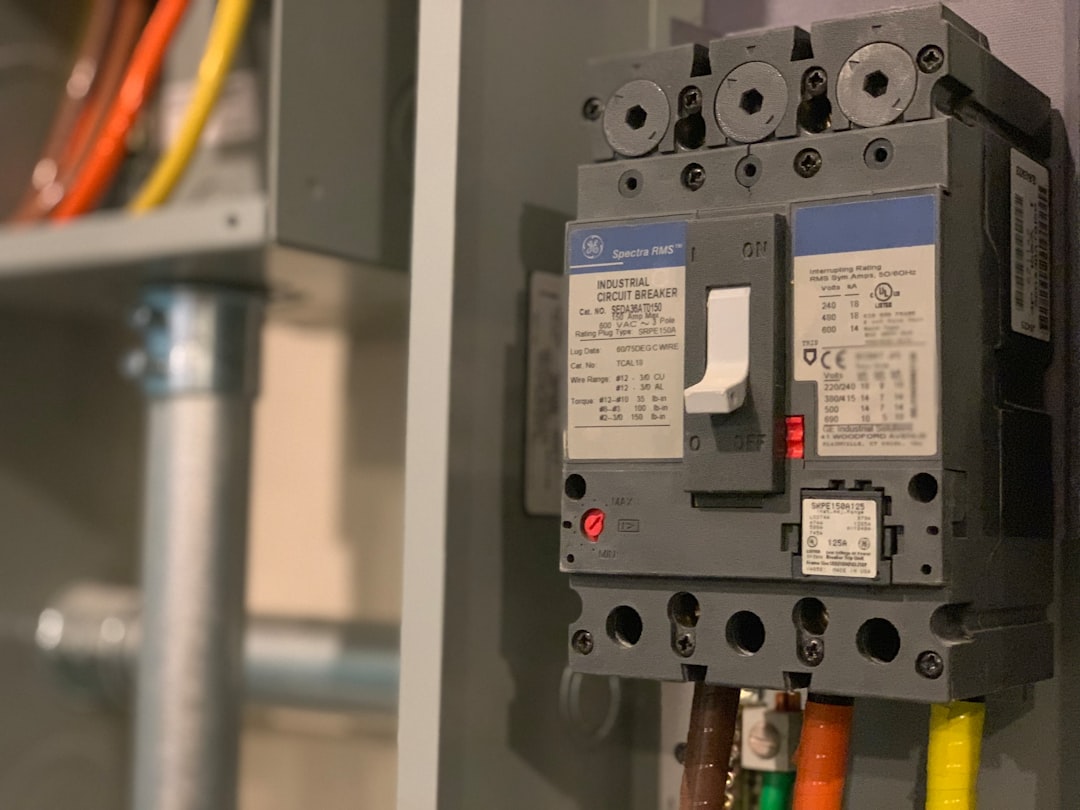
A panel upgrade is the replacement of your home’s main electrical panel — and often the service entrance components that feed it — with a larger or newer panel that can safely handle modern loads and meet current code. The work typically includes the panel itself, breakers, grounding electrode system, bonding of metal water and gas piping, possible meter base replacement, and coordination with JEA or your local utility for the service disconnect and reconnect.
Most Jacksonville panel upgrades happen for one of three reasons.
Federal Pacific Electric (FPE) Stab-Lok panels and Zinsco panels have documented failure histories where the breakers do not trip during overloads. Both are widely recognized fire risks and should be replaced regardless of how the rest of the system is wired. If your panel has either name on it, replacement is not optional — it is the right thing to do for the house and everyone in it.
Old fuse boxes, 60-amp service in homes built before about 1965, and panels with visible burn marks, melted bus, or rusted enclosures also fall into the safety-mandated category.
A 100-amp service was plenty for a 1975 home with one A/C unit, one TV, no microwave, and no home office. A 2026 Jacksonville home with central A/C, an EV charger, multiple home offices, a heat pump water heater, a hot tub, and a workshop is straining or exceeding what 100 amps can deliver safely. Tripping main breakers, dimming lights when the A/C cycles, and an inability to add new circuits because the panel is physically full are all signs you have outgrown the service.
Adding an EV charger, a hot tub, a backup generator, a pool, a workshop, an addition, or a solar system to a home with an older or full panel often triggers a panel upgrade. The new load may exceed the existing service capacity, or the panel may simply not have physical room for the new breakers. Sometimes a sub-panel solves it; sometimes a full upgrade is the right answer.
What the homeowner actually sees during the work is usually less disruptive than they expect. The contractor pulls an electrical permit with the county — Duval, Clay, St. Johns, or Putnam depending on the address — before any work begins. If the main service is being upgraded, the utility is coordinated so the meter is pulled at the start of the day and reset before evening. The crew works through the planned scope in one to two days for most residential jobs, then the county inspector walks the work and signs off. The inspection card stays with the property and is the documentation a future buyer or insurance carrier will ask to see.
Real-world panel upgrade pricing varies because the work varies. Here are the major cost drivers in a Jacksonville-area estimate.
Service size. Going from 100-amp to 200-amp service is the most common upgrade. 200-amp to 400-amp services are needed for large homes, EV-heavy households, and workshops, and they cost considerably more. The panel itself, the conductors, and the meter base all scale with service size.
Meter base condition. If your existing meter base is original to the home, undersized, or corroded, JEA may require replacement as part of the upgrade. That adds material and labor and sometimes utility coordination time.
Service conductors. The conductors running from the meter to the panel may need to be replaced and resized for the new service. Longer runs from a detached meter pedestal to the panel cost more.
Grounding electrode system. Code requires a complete grounding electrode system — ground rods, bonding to metal water lines and gas lines, ground wire to the panel. Older homes often have incomplete or non-compliant grounding that gets brought up to code during the upgrade.
Panel location. A panel installed in an accessible utility room is the easy case. A panel in a finished closet, behind shelving, or in an awkward location adds labor. Outdoor panels add weatherproofing requirements.
Code compliance bring-up. When you open a panel, current code applies. Missing AFCI protection on bedroom circuits, missing GFCI in required locations, and improperly grounded circuits all get corrected. The more remediation needed, the more the project costs.
Permits and utility coordination. Jacksonville falls under Duval County building department for permits, and JEA handles the service disconnect and reconnect. Both are part of any honest estimate.
NEC Article 230 governs the service conductors and the equipment that delivers utility power to the panel, and NEC Article 250 governs the grounding and bonding system that ties everything to earth. In plain language, Article 230 dictates how the wires from the meter reach the main breaker and how that main disconnect has to function; Article 250 dictates that the entire electrical system has a low-resistance path to ground so a fault current trips a breaker instead of finding another way out. An upgrade that touches the service or panel always includes verifying both, because a panel that looks fine but is bonded incorrectly is still a shock and fire risk.
Any electrician quoting a panel upgrade over the phone without seeing the panel, the meter base, the service entrance, the basement or attic where the conductors run, and the existing grounding is guessing. A proper estimate requires an in-home visit, takes thirty minutes to an hour, and produces a written quote with line-item detail.
If a contractor offers a price without seeing the work, you are getting a low-ball entry number that will grow once they actually start. The honest answer is that panel upgrades in Jacksonville range from a manageable project for a straightforward 200-amp like-for-like swap to a much larger project when service conductors, meter bases, grounding systems, and code remediation all come into play. Get the real number from a real estimate.
Florida homeowner insurance carriers have grown stricter about Federal Pacific Stab-Lok and Zinsco panels in recent years. Several carriers will not write a new policy on a home with these panels, and a few will not renew an existing policy without proof of replacement. The safety case for replacing them does not soften with time — both brands have documented histories of breakers that fail to trip during overloads, which is exactly the failure mode that starts panel fires. Even where coverage is available, premiums and deductibles often reflect the added risk. Replacement is the only fix; AFCI or GFCI retrofits do not address the underlying breaker failure.
A panel upgrade brings several NEC requirements into play.
NEC Article 230 covers service-entrance requirements. New service installations require disconnects rated for the service size, proper conductor sizing, and weatherproof construction at the meter.
NEC Article 250 covers grounding and bonding. Modern code requires two ground rods spaced at least six feet apart in most installations, bonding to the metal water service if present, bonding to gas piping, and a continuous grounding electrode conductor properly sized for the service.
NEC Articles 210.8 and 210.12 require GFCI and AFCI protection on specific circuits. When the panel is replaced, any branch circuits that lack the required protection often get upgraded at the same time, since you are already working at the panel.
NEC Article 230.67 requires surge protective devices on new dwelling service installations. A new panel install is the right moment to add a whole-house surge protector — especially in lightning-prone Jacksonville.
Panel upgrades are permit-required work that must be performed by a licensed electrical contractor registered with the Florida Department of Business and Professional Regulation’s Electrical Contractors’ Licensing Board (DBPR ECLB). The permit goes through the Duval County building department for Jacksonville-proper homes. Clay County handles Orange Park and Middleburg. St. Johns County handles Ponte Vedra and St. Augustine.
The process typically involves the permit application, the work, an inspection by the county building department, and the JEA service reconnect after inspection approval. A licensed contractor coordinates all of this for you.
ELR Electric is a licensed Florida electrical contractor serving Jacksonville, Orange Park, Middleburg, and the surrounding NE Florida communities. We provide in-home panel upgrade estimates with written quotes, pull all permits, coordinate with JEA, and stand behind the work. Call us to schedule a real estimate based on a real look at your panel.
Learn more about our service areas on our Jacksonville electrician page and our Middleburg electrician page.