
Outlet installation cost is one of the most-asked questions in residential electrical work, and one of the most-honestly-answered with “it depends.” A like-for-like outlet replacement on an existing circuit is one project. Adding a new outlet on a new dedicated 20-amp kitchen circuit run from the panel through a finished wall to an island is a completely different project. Both fall under “outlet installation” — and the price ranges between them are dramatic. This guide walks Orange Park homeowners through what actually drives the cost so you can recognize an honest estimate when you see one.
Outlet installation refers to the wiring and mounting of a new electrical receptacle in a home, including the work to run conductors from the electrical panel to the outlet location, install the device box, terminate the conductors, install the receptacle, and verify proper operation. The scope ranges from simple — replacing an existing damaged outlet on an existing circuit — to complex — adding a new dedicated 20-amp or 240V circuit for specific appliances or equipment.
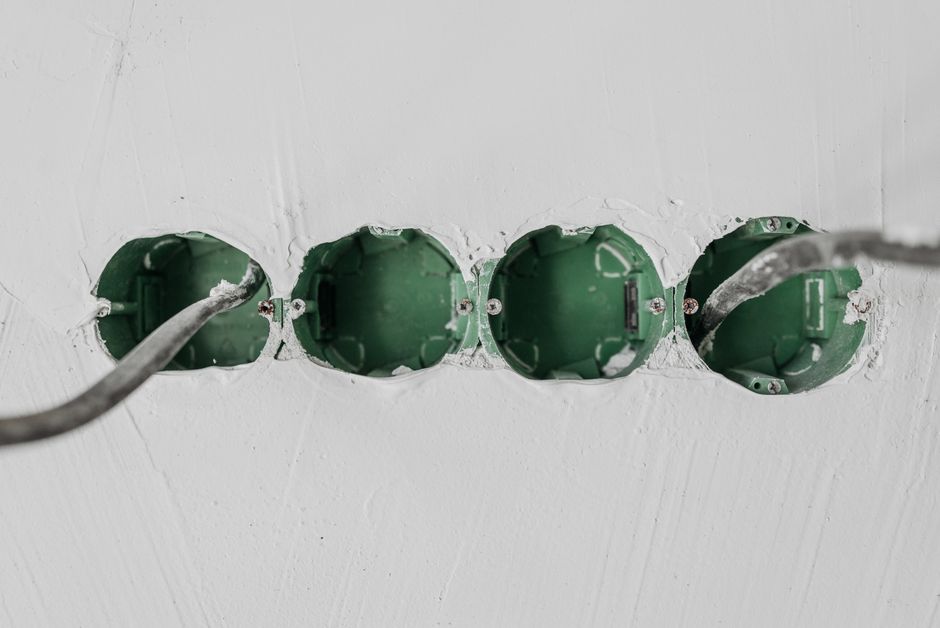
A real Orange Park outlet installation estimate considers several factors that explain why prices vary widely.
The single biggest cost driver in new outlet installations is how far the new outlet sits from the panel. A new outlet ten feet from the panel through an accessible basement or attic is fast work. The same outlet thirty feet away on the opposite side of the house, through finished walls and ceilings, requires fishing wire through enclosed cavities, drilling through plates, and patching drywall. The labor difference is significant.
Adding an outlet to an existing circuit (an extension of an existing run) is faster than running a new dedicated circuit from the panel. Code requires specific dedicated circuits in certain situations — kitchens need at least two 20-amp small-appliance circuits, bathrooms need a dedicated 20-amp receptacle circuit, EV chargers need a dedicated 40 or 50-amp circuit, hot tubs need dedicated circuits with proper bonding. A new outlet that requires a new circuit doubles or triples the labor versus an extension.
Open framing during construction or renovation makes outlet installation fast. Closed walls require fishing. Multi-story homes where the circuit needs to go from the panel up through a floor to a wall add complexity. Hollow concrete walls or slab-on-grade construction (common in Florida) sometimes route circuits through attics rather than through walls.
Outlets in many residential locations require GFCI protection per NEC Article 210.8 — kitchens, bathrooms, garages, basements, laundry areas, outdoors, near sinks. Most residential branch circuits require AFCI protection per NEC Article 210.12. A new outlet installation in a required location includes the GFCI device or AFCI breaker, and bringing the existing circuit up to current code if it lacks protection.
Drywall patching, paint touch-up, and trim work follow the electrical work. Some electricians include patch; some leave it for the homeowner or a separate trade. An honest estimate is clear about what is included and what is not.
Standard 15-amp duplex outlets are the cheapest devices. GFCI outlets cost more. USB-integrated outlets, smart outlets with wifi or Z-Wave control, 20-amp commercial-grade outlets, and 240V outlets for appliances and EV charging cost progressively more. Outdoor weather-resistant tamper-resistant outlets in proper weatherproof boxes with in-use covers are more expensive than interior versions.
New outlet installations and new circuit installations are permit-required work in Florida and must be performed by a licensed electrical contractor. The Clay County building department permit fee, inspection coordination, and contractor administrative time are part of any honest estimate.
Older Jacksonville-area construction adds its own layer to this kind of project. Homes built in the 1970s and 1980s in neighborhoods like Mandarin, Arlington, Sandalwood, Lakeshore, and parts of Orange Park were wired to the standards of their era, which means fewer circuits, fewer outlets per room, and electrical layouts that assumed one television, one window air conditioner, and no home office. A modern household runs more devices on the same wiring, and the cumulative load shows up as warm outlets, dimming lights when the AC starts, and breakers that trip more often than they used to.
A real outlet installation estimate is given in person after an on-site visit, not over the phone. The contractor walks the proposed outlet location, looks at the panel, evaluates the routing options, checks the circuit availability, and produces a written estimate with line-item detail.
Phone quotes for outlet installation are guesses. The price they give is typically the low end of the realistic range — the easy case — and grows once the contractor sees the actual conditions. An honest in-home estimate eliminates that problem and gives you a real number to work with.
The estimate should include the device, the wiring, the labor, the permit, the inspection, and any patch and finish work that is part of the scope. If patch and finish are not included, that should be explicit so you can budget for it separately.
The National Electrical Code drives most of the safety requirements that apply to this work. NEC Article 210.8 mandates GFCI protection in kitchens, baths, garages, laundries, outdoor receptacles, and anywhere within six feet of a sink — the goal is to shut the circuit off in milliseconds when current finds a path through a person instead of through the intended wires. NEC Article 210.12 mandates arc-fault protection on most residential branch circuits, which catches the kind of low-energy arcing inside damaged insulation that starts hidden wall fires. Bringing a home into compliance with these articles is one of the most direct safety improvements an upgrade delivers.
A few patterns come up regularly in Clay County homes.
A 40-amp or 50-amp 240V circuit run from the panel to the garage for a Level 2 EV charger. Cost depends on the panel-to-garage distance and the panel capacity. Many older Orange Park homes need a panel upgrade to fit the new breaker, which extends the project scope.
A 50-amp or 60-amp 240V circuit with GFCI protection (required by NEC Article 680) and a disconnect within sight of the tub. Bonding of the tub structure adds material and labor. Pool and hot tub work is specialty electrical that not all general electricians do well.
Adding a code-compliant outlet on a kitchen island requires running 20-amp small-appliance circuit conductors from the panel to the island, which often involves either trenching through the slab or routing through the ceiling and down through cabinet voids. This is one of the most common — and most underestimated — outlet projects in Orange Park homes.
Weatherproof outlets in proper boxes with in-use covers, GFCI-protected, often on new dedicated circuits. Coastal-area outlets benefit from corrosion-resistant materials throughout.
Multiple 20-amp circuits to handle workshop equipment, EV charging, and storage area lighting. Often combined with a sub-panel in the garage to simplify circuit management.
What the homeowner actually sees during the work is usually less disruptive than they expect. The contractor pulls an electrical permit with the county — Duval, Clay, St. Johns, or Putnam depending on the address — before any work begins. If the main service is being upgraded, the utility is coordinated so the meter is pulled at the start of the day and reset before evening. The crew works through the planned scope in one to two days for most residential jobs, then the county inspector walks the work and signs off. The inspection card stays with the property and is the documentation a future buyer or insurance carrier will ask to see.
Several DIY shortcuts cause real problems.
Splicing into an existing circuit through a junction box hidden behind drywall. Junction boxes must remain accessible per NEC Article 314.29. Hidden splices are a code violation and a fire risk.
Using extension cords as permanent wiring. Extension cords are rated for temporary use. Permanent loads on extension cords overheat the cords and start fires.
Replacing two-prong outlets with three-prong outlets without rewiring or installing GFCI. This creates the false appearance of a grounded outlet without the actual grounding — a code violation and a real safety problem.
Working in an energized panel. New circuits require working at the panel. The bus bars and lugs behind the panel cover are always live unless the utility pulls the meter. This is not a homeowner task.
Electrical work in Florida must be performed by a licensed electrical contractor registered with the DBPR ECLB. Outlet installation that requires a permit (new circuits, new outlet locations, panel work) must go through a licensed contractor. The licensing requirement is what gives the work a real warranty, a permit record, and insurance backing.
When you save money by hiring a handyman, you accept all the long-term risk — failed home inspections at resale, voided insurance claims, code violations the next licensed inspection catches. The total cost of an unlicensed installation that has to be redone properly is much higher than getting it done right the first time.
ELR Electric is a licensed Florida electrical contractor serving Orange Park, Fleming Island, Middleburg, and the broader Clay County area. We provide in-home outlet installation estimates with written quotes, install to current NEC standards, pull Clay County permits, and stand behind the work. Call us to schedule.
Learn more about our work in your area on our Orange Park electrician page and our Green Cove Springs electrician page.