Fleming Island sits on a stretch of Clay County that mixes 1970s and 1980s ranch homes with newer construction in places like Eagle Harbor and Pier Station. That mix matters for circuit problems. The older homes were wired for far smaller electrical loads than modern families use, and the newer ones run into different issues — AFCI breakers that nuisance-trip, builder-grade fixtures that fail early, and HVAC circuits stressed by Florida summers. Either way, a circuit problem rarely fixes itself, and trying to live with one usually means it gets worse.
Circuit repair is the diagnosis and correction of any fault on a branch circuit in your home’s electrical system — the wires, devices, breakers, and connections that carry power from your main panel to outlets, lights, and appliances. It covers tripped breakers that will not reset, dead outlets, flickering or dimming lights, buzzing switches, hot wall plates, and any other sign that a circuit is no longer working the way it should.
Three patterns come up over and over in Clay County. Knowing which one you have helps you describe the problem accurately when you call an electrician.
A breaker that trips occasionally under heavy load — running the microwave, hair dryer, and toaster on the same kitchen circuit — is doing exactly its job. A breaker that trips with nothing obvious running, trips immediately when reset, or feels warm to the touch is a real fault. Causes include overloaded circuits (too many devices on a single 15- or 20-amp run), short circuits inside damaged wiring, ground faults from moisture intrusion, or the breaker itself failing after years of heat cycling.
A single outlet that has stopped working, or a string of outlets that have all gone dead together, usually means one of three things. The GFCI further up the circuit has tripped (every kitchen, bathroom, garage, and exterior outlet in Florida should be GFCI-protected). A connection has come loose, most often at a backstabbed receptacle where push-in wiring has failed. Or a wire has been damaged behind the wall — by a nail, a rodent, or moisture.
Lights that flicker briefly when a large appliance starts are usually normal voltage drop. Lights that flicker constantly, dim noticeably across the whole house, or flicker only on one circuit point to a real problem. Common causes include a loose neutral connection at the panel (a real fire hazard), an overloaded circuit, or service-entrance issues that need utility coordination.
Any audible buzz from electrical equipment is a sign something is loose, arcing, or overheating. A buzzing dimmer is sometimes just an LED bulb incompatibility, but a buzzing breaker, switch, or outlet face is an emergency-grade problem that needs immediate attention.
The National Electrical Code drives most of the safety requirements that apply to this work. NEC Article 210.8 mandates GFCI protection in kitchens, baths, garages, laundries, outdoor receptacles, and anywhere within six feet of a sink — the goal is to shut the circuit off in milliseconds when current finds a path through a person instead of through the intended wires. NEC Article 210.12 mandates arc-fault protection on most residential branch circuits, which catches the kind of low-energy arcing inside damaged insulation that starts hidden wall fires. Bringing a home into compliance with these articles is one of the most direct safety improvements an upgrade delivers.
Older Fleming Island and Orange Park homes were typically wired with 100-amp or 150-amp service and a limited number of branch circuits. That was plenty in 1985 when the original family had a single-door refrigerator, no microwave, one TV, no home office, and one window air conditioning unit. The same panel in 2026 is feeding two refrigerators, a microwave, two dishwashers, central A/C, an EV charger people are starting to add, multiple home offices, and a long list of always-on electronics.
Florida humidity adds a second pressure. Moisture corrodes the copper and aluminum connections inside outlet boxes, switch boxes, and panels much faster here than in the dry Southwest. Salt-air homes closer to the river or downstream of the salt-air zone see this worst.
Finally, lightning. Northeast Florida is one of the most lightning-prone regions in the country, and Clay County sits squarely in it. Surge events damage outlet wiring, breakers, and connected devices in ways that often do not show up immediately — until a circuit starts misbehaving months later.
Older Jacksonville-area construction adds its own layer to this kind of project. Homes built in the 1970s and 1980s in neighborhoods like Mandarin, Arlington, Sandalwood, Lakeshore, and parts of Orange Park were wired to the standards of their era, which means fewer circuits, fewer outlets per room, and electrical layouts that assumed one television, one window air conditioner, and no home office. A modern household runs more devices on the same wiring, and the cumulative load shows up as warm outlets, dimming lights when the AC starts, and breakers that trip more often than they used to.
A real circuit repair starts with diagnosis, not just swapping parts. An experienced electrician will ask what is happening, when it started, what was happening when the symptom first appeared, and whether anything has changed in the house — new appliances, recent storms, water intrusion, renovations.
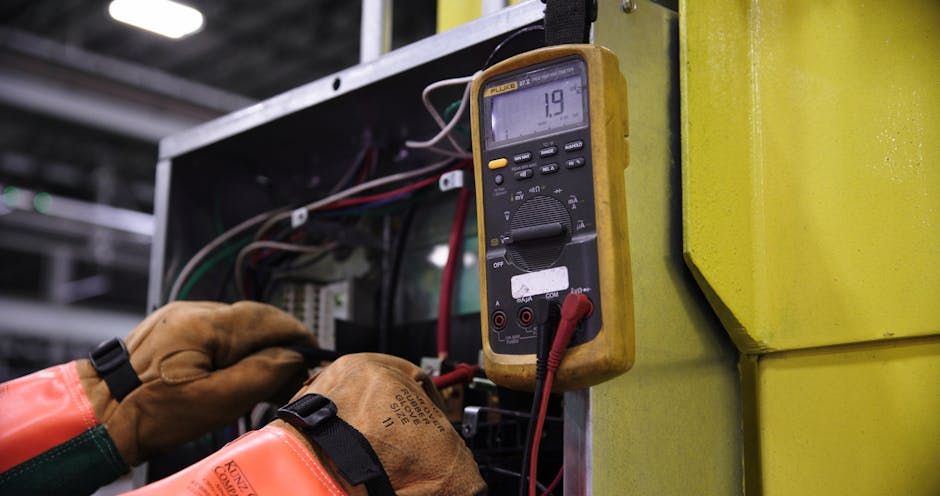
Then comes testing. A multimeter checks voltage at the panel, at the device, and at points along the circuit. A non-contact tester confirms which wires are live. An infrared thermometer or thermal camera finds hot spots in connections, breakers, and panel buses that look fine to the eye. For intermittent problems, a clamp meter and time logging show what the circuit actually does during normal household use, not just during the service call.
Repair follows the diagnosis. Common fixes include replacing failed breakers, repairing or replacing damaged wire runs, tightening or replacing loose connections, swapping backstabbed receptacles for proper screw-terminal devices, installing missing GFCI or AFCI protection per current code, and dividing overloaded circuits into two separate runs when load growth has outpaced the original wiring.
Florida has the highest density of cloud-to-ground lightning strikes of any state in the United States, and thunderstorm-heavy summer afternoons from June through September push every home electrical system harder than the rest of the year. A direct strike is rare; a nearby strike that sends a damaging surge into the home wiring through the utility lines, the cable feed, or the phone line is common. NE Florida homeowners who have lived here through a few storm seasons usually have a story about a fried garage-door opener, a dead refrigerator board, or a router that stopped working after a loud night.
Two NEC articles drive most of the safety upgrades that come with a circuit repair.
NEC Article 210.8 requires GFCI protection for receptacles in kitchens, bathrooms, garages, basements, laundry areas, outdoors, and within six feet of any sink. If your circuit repair touches an outlet in any of those locations, current code typically requires bringing it up to GFCI standard.
NEC Article 210.12 requires AFCI protection on most residential branch circuits — including bedrooms, living areas, kitchens, laundry rooms, and hallways. AFCI breakers detect the kind of low-level arcing that causes most house fires, and any circuit work that opens a panel or replaces a breaker is the right moment to bring the circuit up to AFCI compliance.
A licensed electrical contractor working under Florida DBPR ECLB rules will pull a Clay County electrical permit for any work beyond a simple device replacement, and the permit inspection is where code compliance gets verified.
A few circuit tasks are reasonable DIY — resetting a tripped GFCI, replacing a single bulb, swapping a like-for-like switch with the breaker off if you genuinely know what you are doing. Almost everything else on a problem circuit is best left to a licensed electrician.
Do not keep resetting a breaker that refuses to hold. It is telling you there is a fault on the line, and continuing to reset it stresses the breaker and the wire. Do not “fix” a dead outlet by adding an extension cord to another room — extension cords are designed for temporary use and become fire hazards under continuous load. Do not open a panel cover unless you have been trained to work in an energized panel; the bus bars behind the breakers are always live unless the service drop is pulled.
ELR Electric is a licensed Florida electrical contractor serving Fleming Island, Orange Park, Middleburg, and the broader Clay County area. We diagnose circuit problems properly, fix them to current NEC and Florida code, and pull permits where required. Call us to schedule an in-home diagnosis and we will tell you what is actually wrong before we quote any work.
See more about how we serve your area on our Orange Park electrician page and our Middleburg electrician page.